


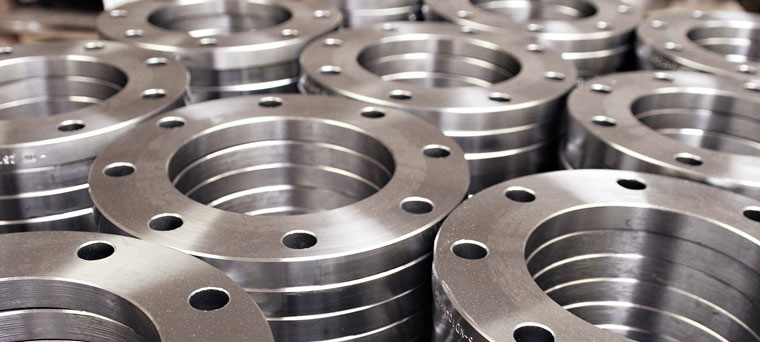
First, let's discuss what a flange actually is and why it's important:
Flanges are basically connecting devices used to connect or connect valves, pipes, pumps and many other piping equipment. The two types of flanges are welding flanges and threaded flanges.
How are flanges connected to each other or to various other devices?
Bolts are used to create a connection between two flanges or between a flange and another piece of equipment. The two parts are bolted together, making them a single unit. Bolting the flange to the pipe provides an easily accessible seal.
What are the different types of flanges available?
Many flanges have been developed to support different pipes and plumbing projects. Some of the most commonly used flanges include slip-on flanges, butt weld flanges, socket weld flanges, and blind flanges.
Let's look at a detailed explanation of how these flanges work.
Butt welding flange:
Butt welding flanges are also commonly called tapered flanges or high hub flanges. Piping with butt weld flanges can move tension within the pipe. This helps avoid pressure build-up and pooling at the bottom of the flange. Butt weld flanges are operable and compatible with high and low pressure piping. These have a long, tapered end that goes through the tube.
Weld-weld flanges consist of a circular joint and a protruding edge around the circumference of the pipe. Weld-on flanges develop a maximum pressure of 5000 psi.
Sliding flange:
A slip-on flange is nothing more than a ring placed on the end of a pipe. The flange face extends a distance to apply the weld bead to the inside diameter or inner diameter of the pipe. As the name of the flanges suggests, these slide on the pipe. Therefore, the size of the flange is larger than the outer diameter or outer diameter of the pipe so that the flange ring can fit around the pipe perfectly. These flanges, called slip flanges, cannot withstand high pressure flow. Therefore, slip-on flanges are ideal for low-pressure applications.
Threaded flange:
Threaded flanges are very similar in appearance to slip-on flanges. However, one of the main differences between threaded and slip-on flanges is that the hole in the threaded flange matches the inside or inside diameter of the pipe. Threaded flanges, as the name suggests, have tapered pipe threads on the flange holes. These flanges are ideal for small diameter and high pressure piping where gases and liquids flow. The main and most important advantage of a threaded flange is that it does not require any welding.
Other important types of flanges include:
Socket weld flange
blind plate
glasses rim flange
Looper Flange
Different diameter flange
square flange
Long neck flange
expansion flange
Spade and Annulus Flanges
welding flange
and flange
Orifice flange
Loose flange
high hub flange
threaded flange
Plate flange


